
Pomene Travel Guide (2026): How to Get There, Best Time to Visit & Things to Do
The complete guide to Pomene, Mozambique — how to get there (and why you need a 4×4), the best time to visit, what to do, where to stay, and what to pack for this remote stretch of the Inhambane coast.
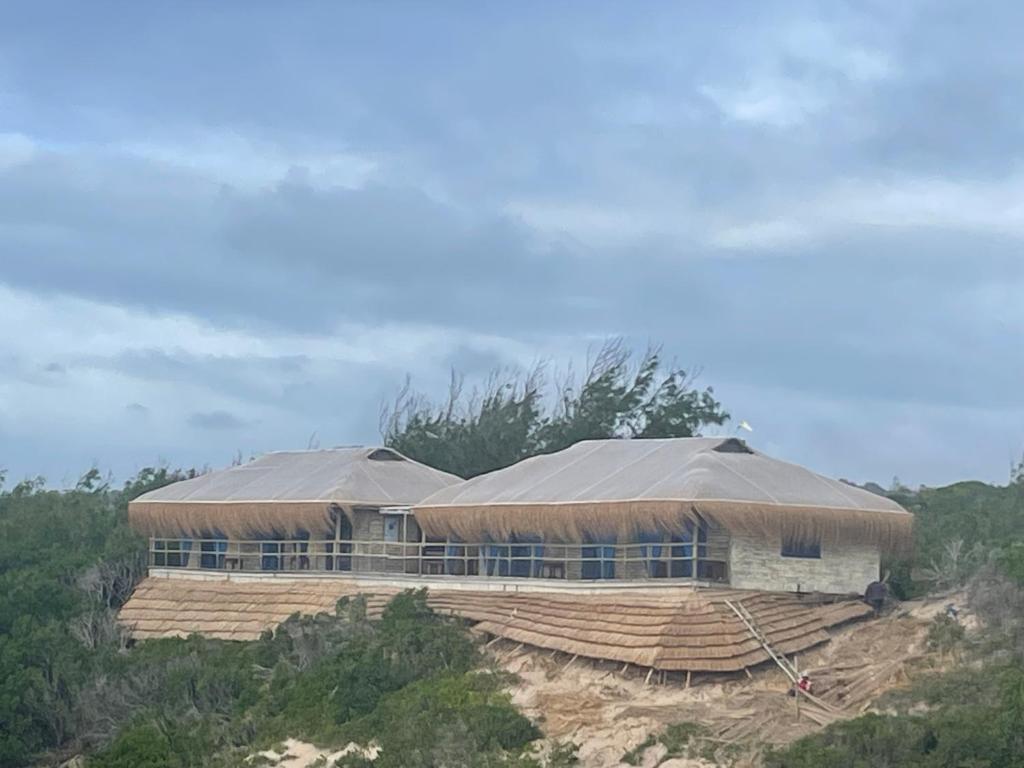
Some places you stumble across. Pomene you choose — and then you have to earn it. Tucked onto a slender peninsula on Mozambique's Inhambane coast, inside a protected reserve, Pomene trades easy access for something rarer: empty white-sand beaches, water the colour of sea glass, a reef a short swim offshore, and a stillness most of the world has forgotten how to make.
This is the complete guide to getting there, timing your trip, and making the most of it once you arrive.
Key takeaways
- Where: a peninsula in the Pomene Reserve, Inhambane Province, ~106 km south of Vilankulo.
- Getting there: fly to Vilankulo (VNX), then drive — a 4×4 is essential for the final sand sections.
- When: warm water year-round; whales Jul–Nov, turtles Oct–Mar, fishing/diving/kite all year.
- Vibe: remote, protected, self-catering. No resort strip, no crowds, no nightlife.
- Stay: Iz-Ma-An Lodge — four en-suite rooms across two solar-powered units on the dune.
Where exactly is Pomene?
Pomene lies on a thin spit of land between the Indian Ocean on one side and a wide, shallow estuary on the other. The whole area falls within the Pomene Reserve, which protects mangroves, dune forest, the bay and the coral reef just offshore. That protection is the reason the place still feels untouched: development is limited, the beaches stay empty, and wildlife — in the water and along the shore — is genuinely abundant.
The nearest town of any size is Vilankulo, about 106 km north, which is also where most visitors arrive by air.
How to get to Pomene
Fly to Vilankulo
The practical gateway is Vilankulo Airport (VNX), served by regional flights from Johannesburg and Maputo. From there, the rest of the journey is by road.
Then drive — and yes, you need a 4×4
The route from Vilankulo is part tar, part graded gravel, and — for the final stretch into the reserve — deep, soft sand. That last section is what decides your vehicle: a high-clearance 4×4 with the ability to lower tyre pressure will get through comfortably; a standard road car will not. Plan to arrive in daylight, and budget the better part of a day with stops.
We've written a dedicated, honest breakdown of the drive — routes, tyre pressure, timing and whether a 2×4 can ever make it — here: Driving to Pomene: do you really need a 4×4?
The reward for a place this untouched is the journey to reach it.
If self-driving the sand isn't for you, talk to your lodge before booking flights — transfers can usually be arranged.
The best time to visit Pomene
The short version: there isn't a bad time. The water stays warm all year, and each season brings something different.
| Season | Months | Highlight |
|---|---|---|
| Whale migration | Jul – Nov | Humpbacks pass close to shore |
| Turtle nesting | Oct – Mar | Loggerheads & leatherbacks come ashore at night |
| Fishing, diving & kitesurfing | Year-round | Warm water, reef and steady wind |
| Most comfortable travel | ~May – Sep | Cooler, drier, bright |
For a full month-by-month breakdown of weather, wildlife and water conditions, see the best time to visit Pomene.
Things to do in Pomene
For a place this quiet, the days fill themselves.
Diving and snorkelling
The reef sits close to shore, in warm, clear water off a coast few divers ever reach. Snorkellers can step almost straight off the beach into coral gardens and shoals of reef fish. Full detail — reefs, tides, marine life and gear — is in our diving and snorkelling in Pomene guide.
Fishing
Pomene is known up the coast for its reef and game fishing — it's the reason many families first came here decades ago, and the reason they keep coming back.
Whale and turtle watching
In season, humpbacks pass close enough to watch from the dune, and turtles haul ashore after dark to nest. Both are unforgettable, and both ask only that you watch quietly and respectfully.
Kitesurfing
Steady cross-shore wind and a wide, empty lagoon make for excellent, uncrowded conditions.
The Old Pomene hotel ruins, blow holes and mangroves
Wander the haunting shell of the abandoned colonial-era hotel, watch the sea spout through the blow holes at the point, or paddle the quiet mangrove channels behind the peninsula. See the full list on our things to do section.
Where to stay: Iz-Ma-An Lodge
Accommodation in Pomene is deliberately limited, which is part of the appeal. Iz-Ma-An Lodge sits right on the dune — two timber-and-thatch units with four en-suite bedrooms between them, wooden beds under white mosquito nets, a full self-catering kitchen, and blue-railed balconies that open onto nothing but the Indian Ocean. The whole lodge is solar-powered and fully self-catering, which suits the off-grid setting.
Because it's self-catering, a little planning goes a long way — bring your main supplies (fresh fish is often available locally) and read our note on getting there and settling in before you come.
What to pack
- Reef-safe sunscreen, a wide hat and a light long-sleeve layer.
- A head torch — essential in turtle season and after dark generally.
- Snorkel gear and any specialist kit (dive computers, fishing tackle) — rental is limited.
- Cash for fuel, tips and local purchases; cards are not useful out here.
- A relaxed attitude to connectivity. Signal is patchy. That's the point.
Is Pomene right for you?
Pomene is for travellers who want empty beaches, warm water, a protected reserve and real quiet — divers, anglers, couples and families who'd rather self-cater on a dune than queue at a buffet. If you need nightlife, big resorts and tar roads to the door, it isn't for you. If the opposite sounds like heaven, few places do it better.
Ready to plan your trip? Check availability at Iz-Ma-An Lodge, or message us on WhatsApp and we'll guide you in — the drive, the dates and the season — step by step.
Frequently asked questions
Where is Pomene, Mozambique?+
Pomene is a small village and nature reserve on a peninsula in Inhambane Province, southern Mozambique, on the Indian Ocean. It sits about 106 km south of Vilankulo, between the open sea and a large tidal estuary.
How do you get to Pomene?+
Most visitors fly into Vilankulo (VNX), the nearest airport, then drive roughly 106 km to Pomene. The final sand sections require a high-clearance 4×4. If you can't self-drive, the lodge can advise on transfers.
What is the best time to visit Pomene?+
The water is warm all year. July to November is best for whales, October to March for nesting turtles, and fishing, diving and kitesurfing run year-round. The cooler, drier months (roughly May to September) are the most comfortable for travel.
Is Pomene worth visiting?+
Yes — if you want empty beaches, clear water, a protected reserve and genuine remoteness. Pomene is not a resort strip; it rewards travellers who value quiet, nature and self-catering over nightlife and convenience.
Do you need a 4×4 for Pomene?+
Yes. The final approach into the reserve is deep, soft sand. A high-clearance 4×4 with the ability to lower tyre pressure is essential; a standard road car cannot make it reliably.
Planning a trip to Pomene?
We'll help you plan every step — the drive, the dates, the season.