
Diving & Snorkelling in Pomene: Reefs Few Ever Reach
Diving and snorkelling in Pomene, Mozambique — untouched reefs, warm clear water, snorkelling straight off the beach, and when the season is at its very best.
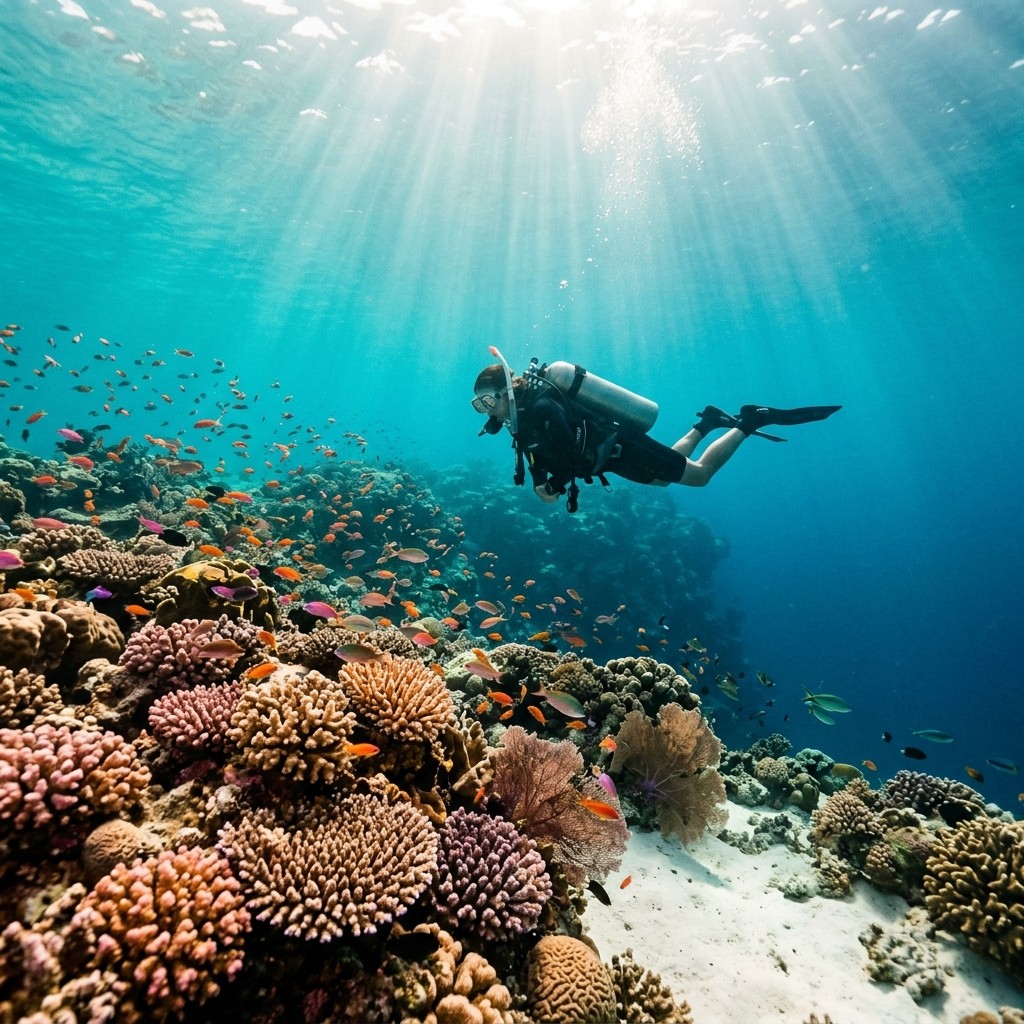
Most people meet Mozambique's reefs in a queue: a dive centre, a briefing, a boat with sixteen others on it, a site everybody has photographed already.
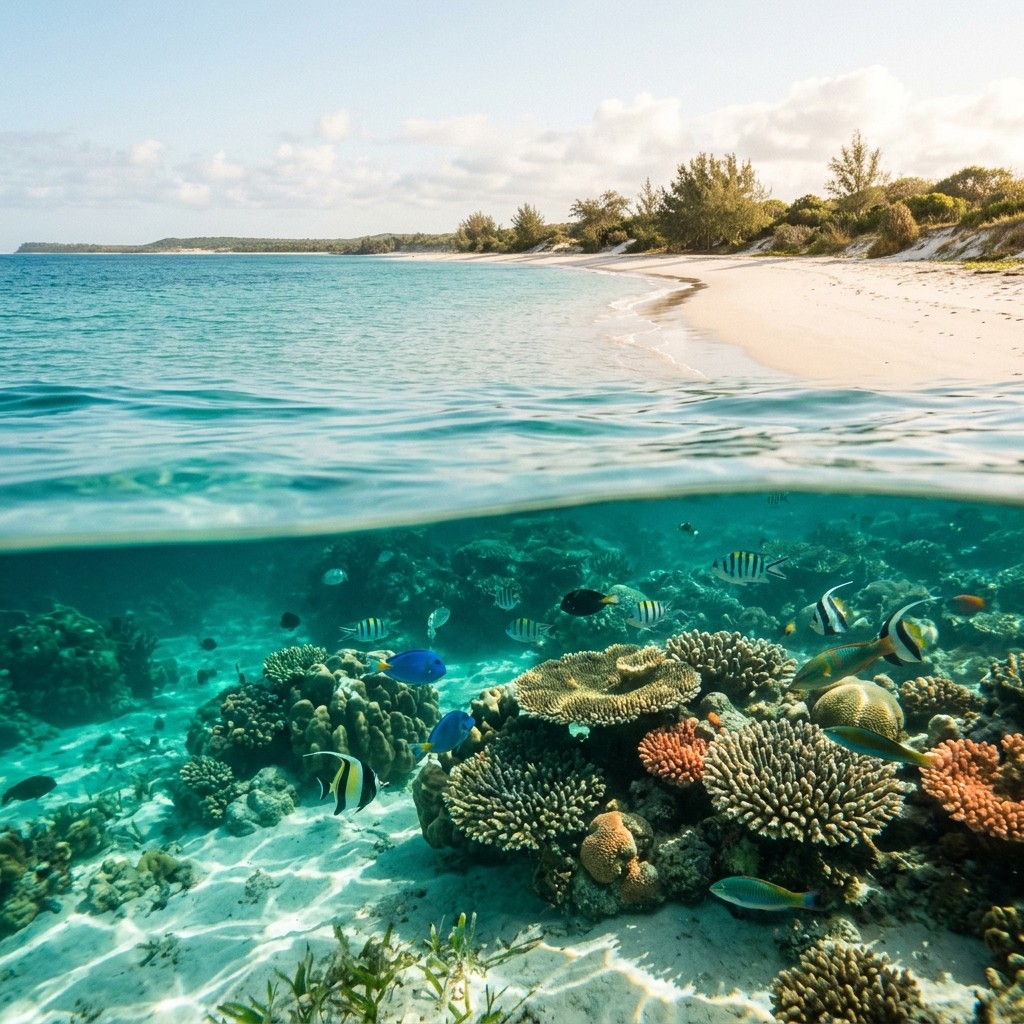
Pomene doesn't work like that. Sit on the dune and the reef is the dark ribbon under the turquoise, a short swim off the beach — and on most days, nobody is on it. Here's what the reefs are like, how to snorkel straight off the sand, when the water is clearest, and what to bring to a coast this far from the nearest dive shop.
Key takeaways
- Reef close to shore — snorkellers enter from the beach below the lodge; no boat needed.
- Warm water year-round. Diving and snorkelling here never really go out of season.
- Clearest conditions: roughly May to September.
- Turtles year-round, nesting October–March; humpback whales June–November, and in season you can hear them underwater.
- Bring your own gear. Pomene is remote; rental is limited to non-existent.
Why the reefs off Pomene are still untouched
Two things have protected this coast, and neither was a marketing decision. The first is the Pomene Reserve — peninsula, bay, mangroves and the coral just offshore all sit inside a protected area, which caps development and keeps pressure off the reef. The second is the road: a high-clearance 4×4 and a slow, sandy final stretch quietly filter out day-trippers and tour buses.
The result is one of the more genuinely unspoilt reef systems in Africa — not because it's secret, but because it's inconvenient. Reefs recover in quiet water, and fish that aren't chased get curious instead of nervous.
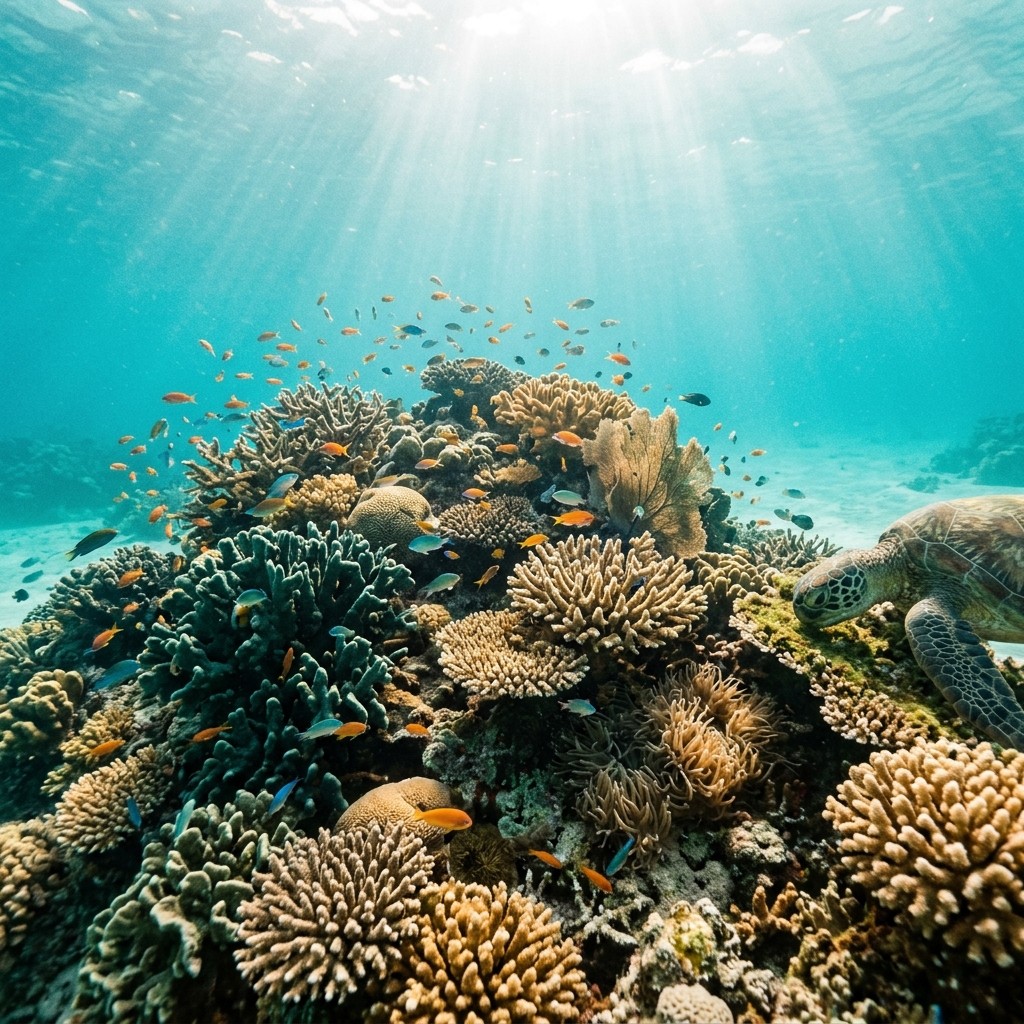
Snorkelling in Pomene — straight off the beach
Snorkelling in Mozambique usually means booking a boat. At Pomene, on a calm day at the right stage of the tide, it means walking down the dune with a mask in your hand.
The ocean side. Coral patches and reef fish a short swim out, in water clear enough to pick out the reef from the dune before you get in. Best on a calm morning, before the wind puts a chop on the surface.
The estuary side. Sheltered, shallow, bath-warm water behind the peninsula. Less coral, but calmer — where nervous swimmers and younger kids should start. Snorkelling for kids works here because you choose your difficulty: let them learn to breathe through a tube with their feet still on sand, then move to the reef. Bring properly sized children's masks from home; fit is everything.
Before you get in:
- Go early — mornings are calmest and clearest, before the afternoon wind.
- Snorkel the rising tide. Water pushing in over the reef is clearer than water draining off it.
- Never snorkel alone, and watch the current — it's easy to drift while looking down.
- Reef shoes for the entry, and a rash vest beats sunscreen for an hour face-down in equatorial sun.
Diving in Pomene: what's below the surface
Beyond the shallow patches, the reef steps down. Diving on the Inhambane coast has a reputation built on Tofo and Barra a couple of hours south — same warm water, same reef systems, same big animals on migration, and the long-running research of the Marine Megafauna Foundation on that stretch. What Pomene subtracts is the crowd.
What you're diving here:
- Coral reef and drop-offs offshore, reached by boat.
- Shallow inshore coral you can snorkel or free-dive from the beach.
- Structure around the point, where current and rock concentrate life.
Because Pomene is off-grid, this isn't walk-in-and-book-a-tank the way Tofo is. Message us before you travel and we'll tell you honestly what boats and gear are running around your dates. Certified divers should bring card, log and ideally their own computer; if you aren't certified, an open-water course through PADI opens up the offshore sites, though a mask and fins cover everything inshore. DAN's guidance on diving far from a recompression chamber is worth an hour before you come.
A reef nobody is queueing for is a rare thing. Treat it like it might stay that way.
What you'll see
No reef comes with a guarantee, and anyone who says otherwise is selling something. But this is the cast:
| What | When | Where |
|---|---|---|
| Reef fish — parrotfish, angelfish, snapper, wrasse | Year-round | Shallow coral, off the beach |
| Turtles — loggerhead, leatherback, green | Year-round; nesting Oct–Mar | Reef and shallows |
| Rays and guitarfish | Year-round | Sand flats and reef edges |
| Moray eels, octopus, lionfish, nudibranchs | Year-round | In the coral, if you slow down |
| Humpback whales (heard, sometimes seen) | June–November | Offshore, on migration |
| Game fish — kingfish, trevally, barracuda | Year-round | Off the point and drop-offs |
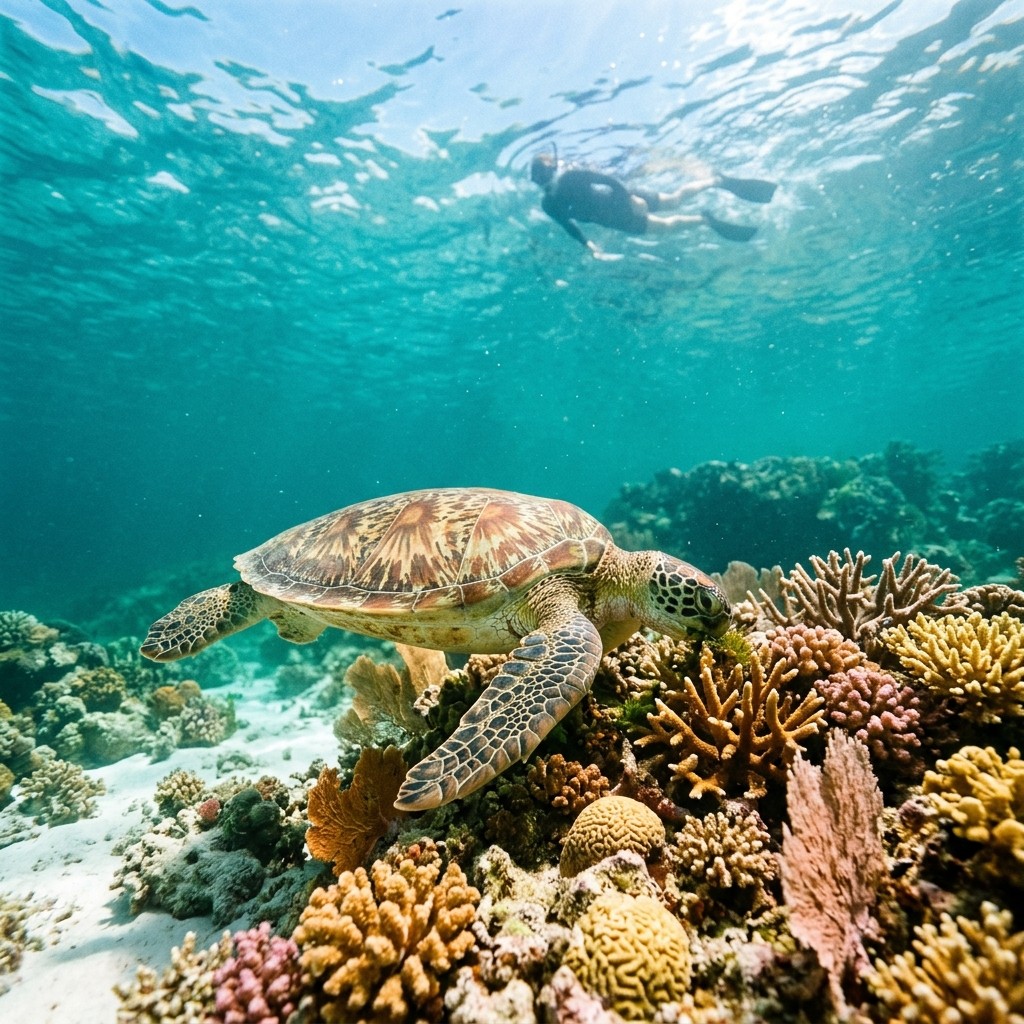
Turtles. This is a nesting coastline, not just a passing one — and every species here is listed as threatened or worse on the IUCN Red List, which is part of why a dark, undeveloped beach matters. Snorkelling with turtles in Mozambique is patience rather than luck: find one grazing, stay level with it, don't swim at it, and it will usually carry on eating while you watch.
Whale song. From roughly June to November, humpbacks pass close to this coast heading north. Get in the water in season and you may hear them before you see anything — a low moan that arrives through your chest rather than your ears. If that's what you came for, read our guide to whale watching in Pomene next.
Dive season in Mozambique: when to come
There's no closed season. Pomene sits in the warm Mozambique Channel and the water stays swim-friendly every month. What changes is the surface and the visibility.
| Period | Water & conditions | What it's good for |
|---|---|---|
| May – Sep | Cooler, drier, generally calmest and clearest | Best all-round visibility; whales from June |
| Jun – Nov | Warming through the window | Humpbacks offshore — and audible underwater |
| Oct – Mar | Warmest water, more humidity, wind in bursts | Turtle nesting; long warm snorkels, the odd blown-out day |
One answer: May to September for the most reliably clear, calm water, with whales from June. For the warmest water and turtles nesting at night, come in the southern summer and accept that a couple of days may be blown out.
For the full month-by-month picture, see our best time to visit Pomene guide.
What to bring
Pomene is off-grid and two hours of sand from the nearest town of any size. Assume nothing is available locally:
- Mask, snorkel, fins — your own, correctly fitted, plus a spare strap.
- Reef shoes and a rash vest.
- Dive computer, torch, SMB and specialist kit if you're diving, with your certification card and log.
- Defogger, a mesh bag so wet gear drains, and a dry bag for phone and camera.
- Reef-safe sunscreen — and less of it, because the rash vest is doing the work.
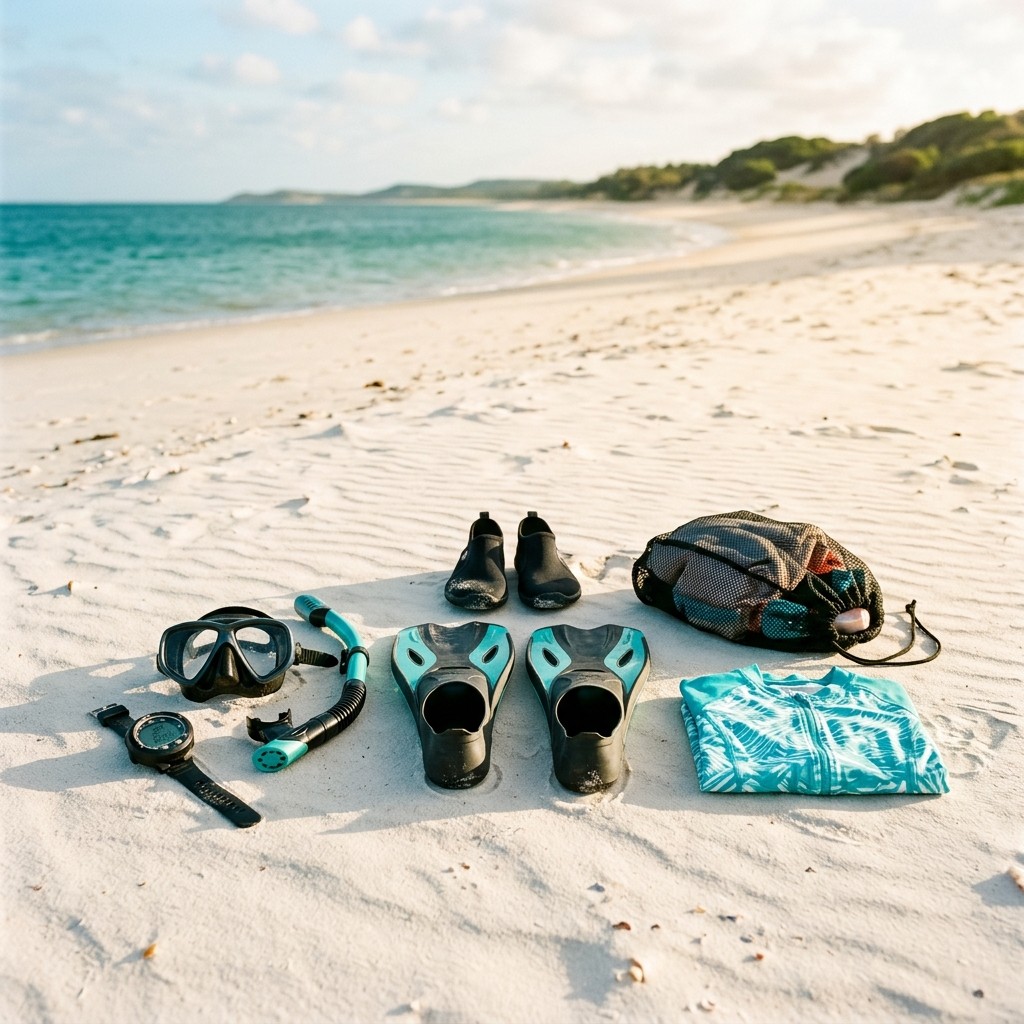
The same rule runs through our Pomene travel guide: bring what you need, because the shops are far behind you.
Diving and snorkelling responsibly
This reef is worth the drive because very few people have touched it. Keeping it that way isn't complicated — Green Fins publishes the full code for divers and snorkellers, and it comes down to this:
- Don't stand on coral, kneel on it, or hold it. Coral is an animal, and it takes years to grow back.
- Take nothing. Shells, coral fragments, starfish — all of it stays.
- Watch, don't chase. Turtles, rays and octopus leave if you swim at them; hold still and they often come to you instead.
- No feeding, ever, and mind your fins — most snorkeller damage is accidental backwash from a careless kick.
Before you book
You'll need a 4×4 for the final sand sections, whatever your GPS thinks about the timings — read our honest guide to driving to Pomene first. The lodge is small, at four en-suite rooms, so it's unforgiving if you leave it late over South African school holidays. And tell us what you're coming for: snorkel-off-the-beach and boat-dives-offshore are two different trips to plan.
The last word
Pomene will never be the easiest place in Mozambique to dive. No dive shop on the corner, no boat leaving at nine every morning, no rental rack to raid if you forget your fins. You plan ahead, pack properly, and earn the last fifty kilometres in low range.
What you get back is what's disappearing everywhere else: reef that hasn't been worn smooth, warm water twelve months a year, coral a swim from a beach with nobody else's footprints on it, and turtles that keep grazing because nobody taught them to bolt. That's the honest case for diving and snorkelling in Pomene — not the biggest name on the Inhambane coast, just the quietest water on it.
Want a reef that nobody else is on? Check availability at Iz-Ma-An Lodge, or message us on WhatsApp — tell us you're coming to dive or snorkel, and we'll tell you the calmest weeks and exactly what to pack.
Frequently asked questions
Is there good diving in Mozambique?+
Yes — the Inhambane coast is one of the best diving regions in the western Indian Ocean, with warm water, coral reefs close to shore and big marine life passing through on migration. Tofo and Barra are the famous dive bases; Pomene, further north on the same coastline, has the same warm, clear water and reefs with almost none of the traffic.
Can you snorkel straight off the beach in Pomene?+
Yes. The reef at Pomene sits close inshore, so on a calm day at the right stage of the tide you can walk in from the beach below the lodge, swim a short way out and be over coral and reef fish without a boat. It is one of the few places on the Mozambican coast where beach-entry snorkelling is this easy and this empty.
What is the best time of year to dive in Mozambique?+
The water off Pomene is warm and diveable all year. Conditions are generally clearest and calmest in the cooler, drier months of roughly May to September; the warmer months from November to March bring the warmest water and turtle season, with occasional wind or rain reducing visibility for a day or two at a time.
Can you snorkel with turtles in Mozambique?+
Turtles are resident along this coast year-round and are regularly seen by snorkellers and divers over the reefs at Pomene. Nesting season runs roughly October to March, when females come ashore at night to lay. Encounters are never guaranteed — but you watch, you don't chase, and often that is when they come closer.
Planning a trip to Pomene?
We'll help you plan every step — the drive, the dates, the season.