
Self-Catering vs All-Inclusive in Mozambique: Which Suits Your Trip? (2026)
Self-catering or all-inclusive for your Mozambique trip? A practical comparison of cost, freedom and experience — plus what to expect from a solar-powered self-catering lodge in Pomene.
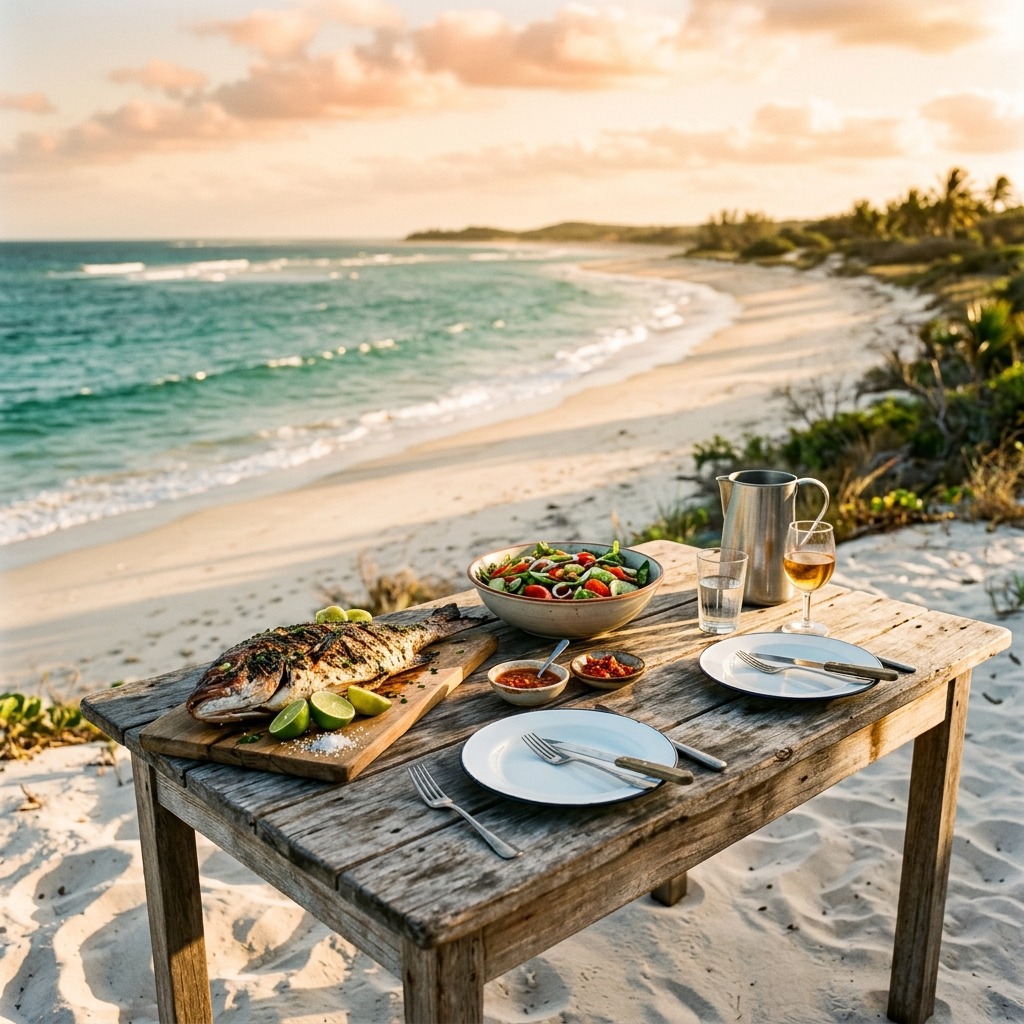
Most people planning a trip to Mozambique reach the same fork in the road: book an all-inclusive resort where every meal is handled for you, or book a self-catering lodge in Mozambique and run the week your own way. It's a bigger decision than it looks, because it shapes almost everything else about the trip — what you spend, when you eat, how much of the day belongs to you, and how close you get to the place you came to see.
Here's the honest comparison — and, at the end, the reason it doesn't have to be a straight either/or any more.
Key takeaways
- Self-catering means a private kitchen, not a lower standard of stay.
- The maths favours self-catering as your group gets bigger and your stay gets longer.
- Freedom is the real win: eat when you like, feed kids early, cook your own catch.
- Bring your main supplies. Pomene has no supermarket — stock up in Massinga.
- Off-grid by design: the lodge runs on solar, which shapes how you cook and use power.
- Don't want to cook? We also offer half board and fully inclusive stays.
What "self-catering" actually means at a lodge like Izmaan
Self-catering simply means you get your own kitchen and cook your own meals. No buffet, no set dinner time, no menu you didn't choose.
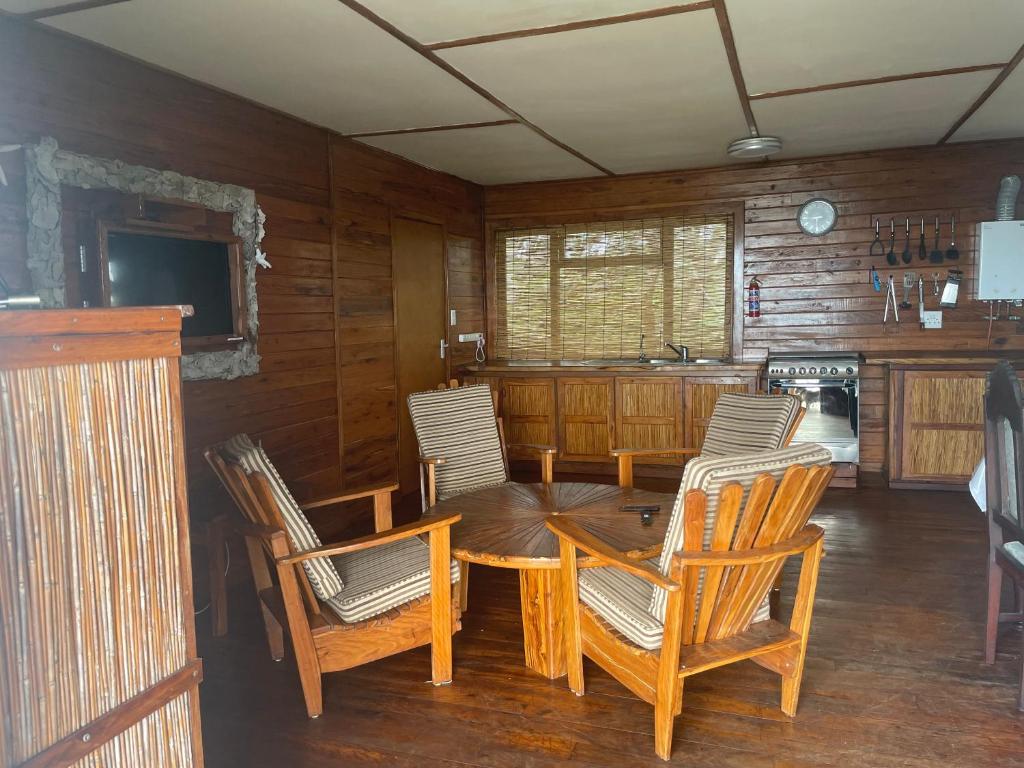
At Iz-Ma-An Lodge that looks like this: two timber-and-thatch units on the dune, four en-suite bedrooms between them sleeping eight, a full self-catering kitchen, and a thatched dining space made for long, slow lunches. Blue-railed balconies open onto nothing but the Indian Ocean, and the beach is about 100 metres away.
What it does not mean is roughing it. This is the part worth saying plainly, because "self-catering" makes some travellers picture a bare cottage and a two-plate stove. You still get en-suite bathrooms, proper beds under white mosquito nets, and a private stretch of dune. You just also get the kitchen — and the freedom that comes with it.
Cost comparison: where the money actually goes
All-inclusive resorts are priced per person, per night. That single fact drives everything. Every extra guest — including a five-year-old who eats a bread roll and half a banana — adds another full rate to the bill.
Self-catering flips the model. You pay for the accommodation, then feed the group from one shopping trip. Groceries scale with the household, not the headcount, and a bag of rice costs the same whether two people or six are eating it.
| All-inclusive resort | Self-catering lodge | |
|---|---|---|
| How it's priced | Per person, per night | Per unit or per lodge |
| Meals | Included, at set times and places | Yours to plan, cook and time |
| Drinks | Often included, sometimes capped by brand | Bought at your own budget |
| Children | Usually charged near-adult rates | Fed from the same shop as everyone else |
| Special diets | Depends what the kitchen can do | Entirely in your hands |
| Your own catch | Rarely cooked for you | Dinner |
| Extras that surprise you | Premium drinks, à-la-carte upgrades, tips | Groceries and fuel — that's about it |
| Best value when | Short stays, couples, no cooking wanted | Longer stays, families, groups, anglers |
There's no single number that fits every trip, and anyone quoting you one is guessing. But the shape of it is consistent: the longer you stay and the more of you there are, the further self-catering pulls ahead. A couple on a two-night stop may find the difference small. A family of six over ten nights will usually find it substantial — and the money saved on meals tends to end up somewhere better, like a boat day.
One thing the table can't show: a small lodge isn't locked into either column. Our own half-board and fully inclusive options put the catering back in without the resort pricing model or the resort dining room. More on those further down.
Freedom and flexibility: eating on your schedule
Cost is the argument people start with. Freedom is the one they remember.
An all-inclusive day is quietly structured around its dining room. Breakfast closes at ten. Dinner starts at seven. Come back late from a fishing trip, or lose track of an afternoon on the sand, and you're negotiating with a kitchen's timetable.
Self-catering removes that entirely:
- Eat when the day says so. Coffee at sunrise on the balcony, a late lunch after the tide turns, dinner when the light finally goes.
- Feed children early, then have a proper adult evening once they're down.
- Cook your own catch. Pomene's fishing is what first put it on the map. Landing a fish in the morning and eating it that night is a genuinely different holiday from ordering it off a menu.
- Eat the way you actually eat. Allergies, fussy toddlers, a diet you're sticking to — no explaining it to anyone.
- Skip a meal without wasting it. Nobody's counting what you didn't use.
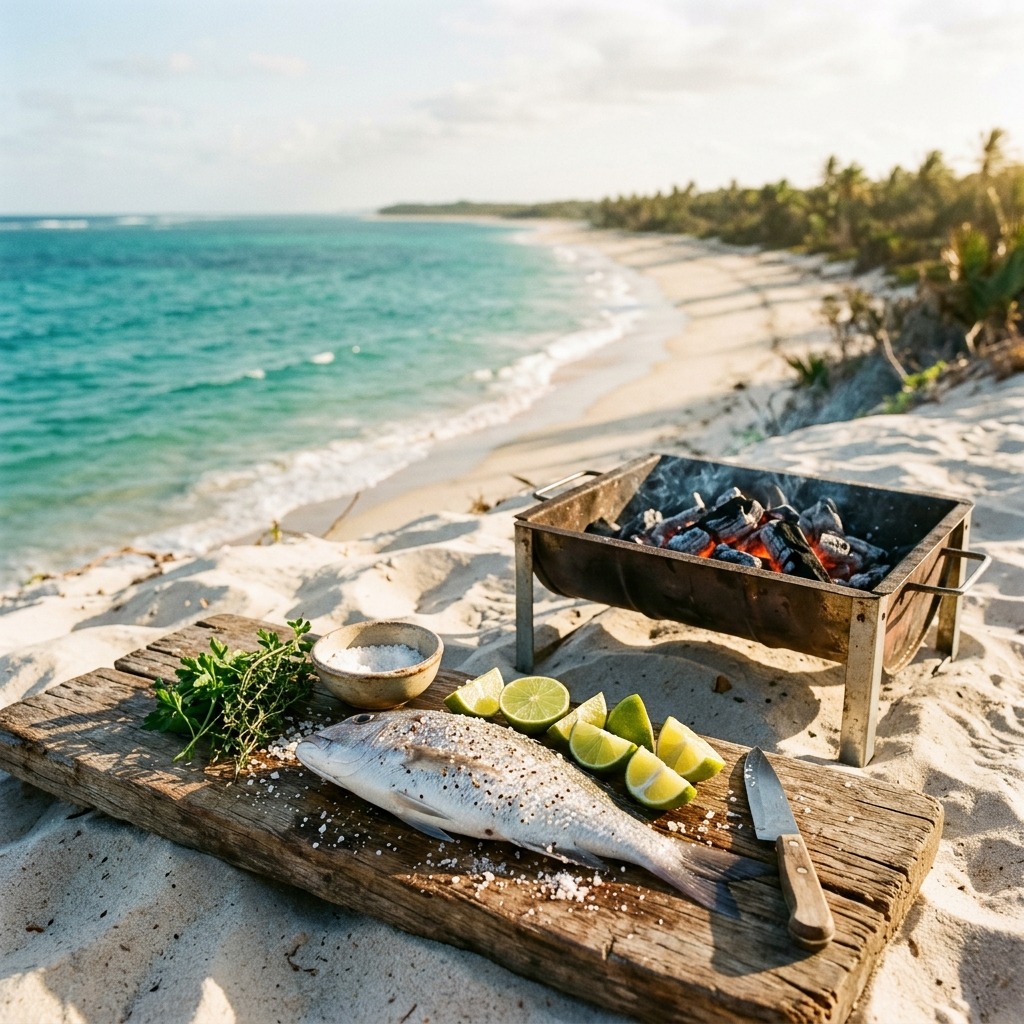
The kitchen also becomes the social centre of the trip, which is not a small thing on a stay where the whole group has taken the lodge. People cook together, eat late, and stay at the table.
What's provided vs what you bring
The lodge gives you the kitchen, the dining space, the beds and the power. You bring the food.
Provided: a full self-catering kitchen and thatched dining area, four en-suite bedrooms with mosquito nets, and solar power throughout. If you want the exact kitchen inventory before you pack — what's in the cupboards, what you'd be duplicating — message us and we'll send you the current list rather than have you guess.
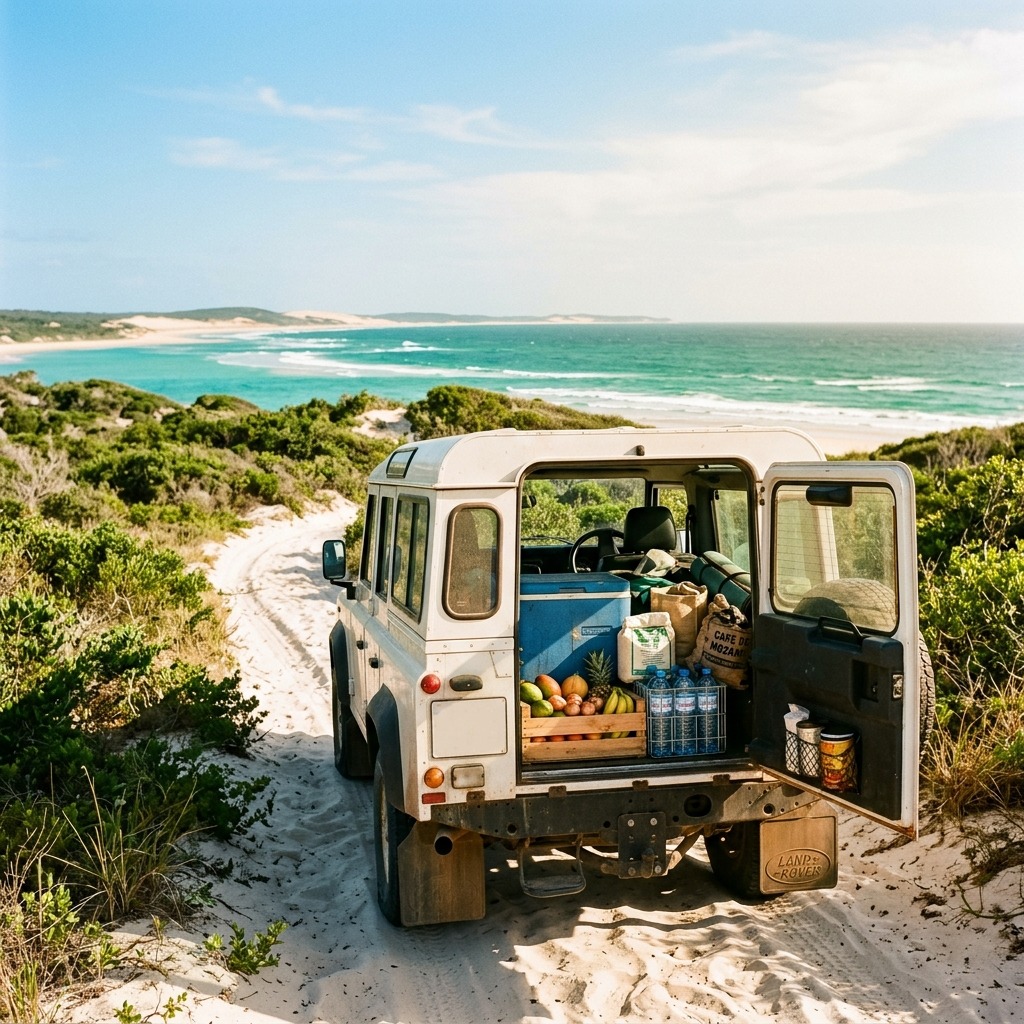
Bring: your main groceries, drinking water and drinks, coffee and staples, sunscreen and insect repellent, and any speciality ingredient you'd miss. Fresh fish is often available locally, which is worth building into the plan.
Also worth knowing: this is an off-grid lodge, so fresh water is precious. Wash up in a basin rather than under a running tap, and you'll never notice the constraint.
Who self-catering suits best
Self-catering is the better choice if you're a family feeding children on their own clock; a group taking the whole lodge, where the kitchen table becomes the point of the evening; on a longer stay, where the value gap widens night by night; an angler or diver working around tides rather than mealtimes; or a budget-luxury traveller who wants a beautiful, private beachfront place and would rather spend on the setting than the buffet.
It's the wrong choice if you don't want to cook at all on holiday, or if you'd simply rather someone else handled dinner after a day on the water. That's a completely fair thing to want — and you no longer have to choose a resort to get it.
Don't want to cook? You don't have to
We now offer half board and fully inclusive stays alongside self-catering, so the kitchen is an option rather than an obligation.
- Self-catering — the kitchen is yours, and so is every meal and every timing decision.
- Half board — breakfast and dinner are prepared for you; lunch and the middle of the day stay your own. The usual sweet spot: nobody cooks after dark, but you still eat lunch when the tide says so.
- Fully inclusive — meals taken care of for the whole stay, so you unpack once and think about nothing else.
Because the lodge is small — four en-suite rooms across two units — these are arranged around your group rather than run off a fixed buffet. Tell us your dates and we'll send you exactly what each option includes and what it costs.
Worth knowing: even on a catered stay, the kitchen doesn't disappear. If you land a fish worth cooking yourself, you can.
Sustainability: solar power and off-grid living in Pomene
Pomene sits inside a protected nature reserve, and the lodge is solar-powered and off-grid. That's not a marketing line here; it's simply how a place at the end of a sand track keeps the lights on.
In practice it's an easy adjustment that quietly improves the stay. Cooking your own meals in one kitchen uses far less energy than a resort kitchen running all day. Charge devices in daylight, run heavy appliances during peak sun, and be sparing with water — and off-grid stops feeling like a limitation and starts feeling like the reason the beach outside is still empty.
How to plan supplies for a remote self-catering trip
A little planning makes the whole thing effortless:
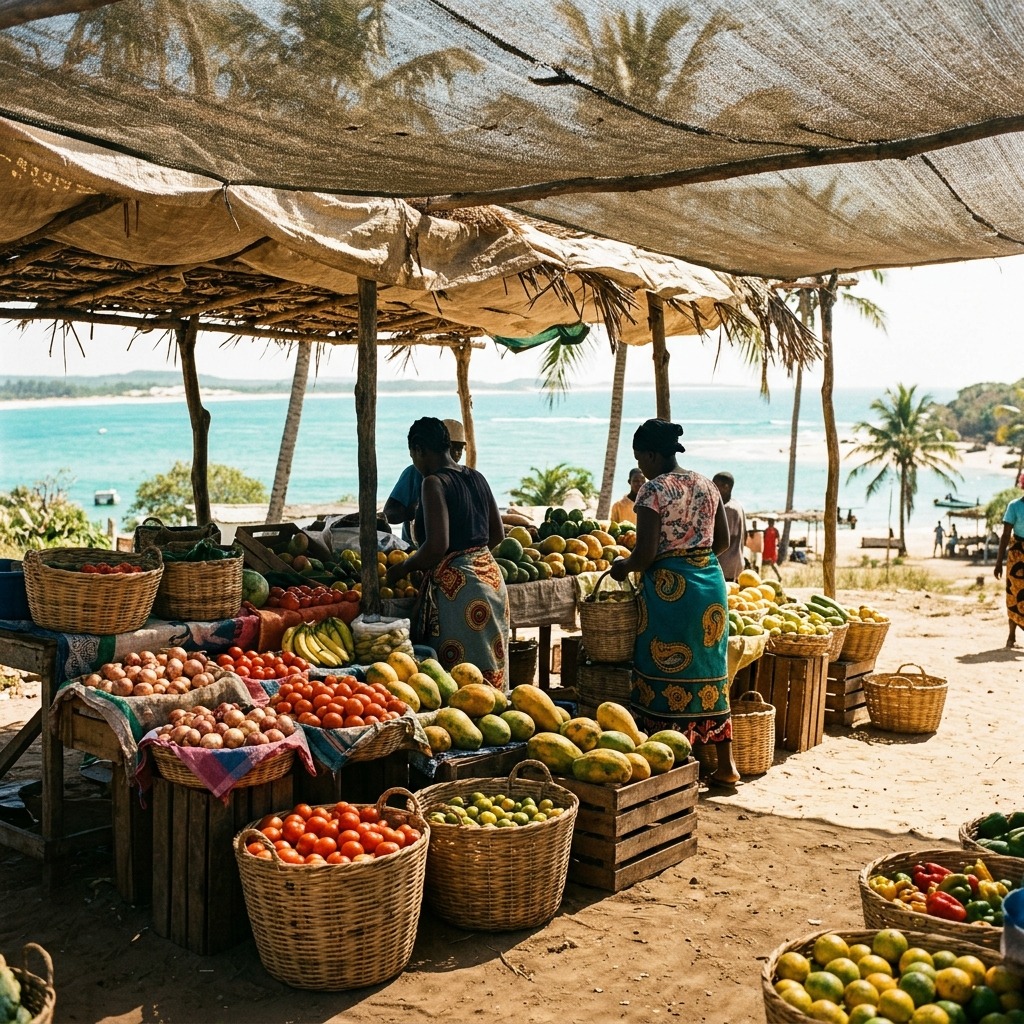
- Do your big shop in Massinga, the last town on the EN1 before the Pomene turnoff — after that it's dirt and sand all the way to the coast, with nowhere to top up. Coming up from the south, Maxixe and Inhambane are bigger and worth a stop if you want more choice.
- Plan meals before you shop. Write out dinners for the number of nights you're staying, then buy to that list. It takes twenty minutes and saves a wasted trip.
- Buy dry staples generously, fresh food modestly — and leave room in the plan for fish you didn't buy.
- Bring a cooler box and pack cold items last, because the final leg is slow sand.
- Arrive in daylight. The last stretch into Pomene is deep, soft sand and a 4×4 is essential — see our honest breakdown of the drive to Pomene.
- Ask us first. Tell us your dates and group and we'll tell you what's genuinely worth carrying in.
For the wider picture — flights, seasons, what there is to do once you've unpacked — start with our full Pomene travel guide.
So, is self-catering worth it in Mozambique?
If you're travelling as a family or a group, staying more than a few nights, and you'd rather your holiday belonged to you than to a dining-room schedule — yes, comfortably. You'll usually spend less, you'll certainly eat better, and you'll spend the week on your own time.
But the honest answer is that it depends on the trip, not on the principle. A big resort hands you a holiday where everything is handled and very little is yours. What a small lodge can do — and a resort can't — is let you pick: cook every meal, hand over dinner, or hand over all of it, on a dune with four rooms and your own stretch of sand either way.
Ready to plan it? Tell us your dates and how you'd like to eat — self-catering, half board or fully inclusive — and we'll come back with what's included and what it costs. Travelling as a family or a group? Take both units on a whole-lodge stay: four en-suite rooms, sleeps eight, and the beach to yourselves.
Frequently asked questions
Is self-catering worth it in Mozambique?+
For most families, groups and stays of four nights or more, yes. All-inclusive resorts charge per person per night, while groceries scale with the household rather than the headcount — so the longer you stay and the more of you there are, the more the maths favours self-catering. You also eat when you like, feed children on their own schedule, and cook the fish you caught that morning.
What does self-catering mean at a lodge?+
It means the lodge gives you a private, fully equipped kitchen and dining space, and you cook your own meals rather than eating in a restaurant or buffet. At Iz-Ma-An Lodge in Pomene that's a full self-catering kitchen and a thatched dining area shared between two units — four en-suite bedrooms in total, sleeping eight.
Is there a shop in Pomene?+
Not a supermarket. Pomene is a small village inside a nature reserve at the end of a sand track, so you should arrive with your main supplies already bought. Most guests do their big shop in Massinga, the last town on the EN1 before the Pomene turnoff. Fresh fish is often available locally, and that's usually the best thing you'll eat all week.
Does self-catering mean a less luxurious stay?+
No. Self-catering describes how the meals work, not the standard of the place. You still get en-suite bedrooms, a private beachfront setting and a lodge on the dune — you just get the kitchen too, and with it the freedom to run the day your own way.
Who is self-catering not right for?+
Travellers who don't want to cook at all on holiday, or who need restaurants, room service and nightlife on the doorstep. If Pomene still appeals but the cooking doesn't, you don't have to choose a resort — Iz-Ma-An Lodge also offers half-board and fully inclusive stays.
Does Iz-Ma-An Lodge offer half board or all-inclusive stays?+
Yes. Alongside self-catering, the lodge offers half board — breakfast and dinner prepared for you, with the middle of the day left free — and fully inclusive stays where meals are handled for the whole trip. Because it's a four-bedroom lodge rather than a resort, these are arranged around your group rather than a fixed buffet. Message us with your dates and we'll send you exactly what each option includes and what it costs.
Can you cook the fish you catch at the lodge?+
Yes — that's one of the real advantages of a self-catering lodge on a coast known for its fishing. What you land in the morning can be dinner that evening, in your own kitchen, on your own schedule.
Planning a trip to Pomene?
We'll help you plan every step — the drive, the dates, the season.