
Whale Watching in Pomene, Mozambique: When, Where & How to See Humpbacks (2026)
Whale watching in Pomene, Mozambique — when humpback whale season runs (June to November, peaking July–September), whether you can see whales from the beach, and how to watch them from the dune at Iz-Ma-An Lodge.
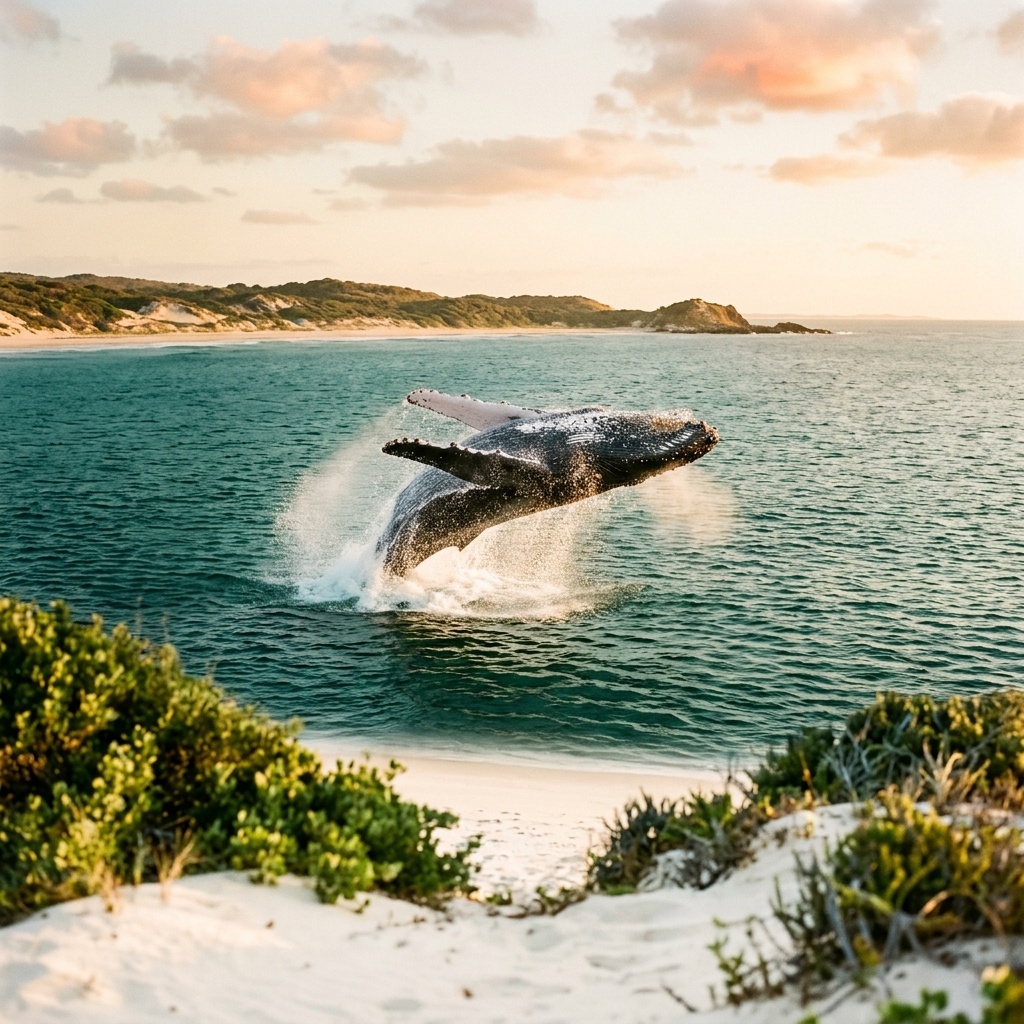
From about June to November, the view from our balcony changes. The Indian Ocean off Pomene — usually an empty sheet of turquoise — starts throwing up white plumes of spray, then black tails, then, on the good days, forty tonnes of humpback whale clearing the water entirely.
This is the guide to whale watching in Pomene: when the season runs, why the whales come, and how to watch them — mostly without leaving your chair.
Key takeaways
- Season: roughly June to November; first arrivals in June, most whales gone by mid-November.
- Peak: late July through September — the densest numbers and the most breaching, tail-slapping and singing.
- No boat needed: the migration path runs close to shore here. Whales are regularly visible from the beach and the dune.
- Best conditions: calm, glassy mornings, and the golden hour before sunset. Bring binoculars.
- Bonus overlap: stay in October and you can catch the last whales and the first nesting turtles.
When is whale season in Pomene?
The humpbacks' timetable is remarkably consistent from year to year:
| Month | What's happening |
|---|---|
| June | First arrivals — blows on the horizon, numbers building |
| July | Season proper begins; sightings most days |
| Aug – Sep | Peak — competitive groups, breaching, song; the spectacle at full volume |
| October | Winding down; mothers with young calves linger in the shallows |
| November | The tail end — last stragglers heading south |
Within that window, the sweet spot is late July to mid-September, when the sheer density of whales along this coast means sightings are close to guaranteed on any clear day.
If you're weighing a whale trip against the rest of Pomene's calendar — turtles, fishing, kitesurfing, the weather — our month-by-month best time to visit Pomene guide puts it all side by side.
Why the whales come here
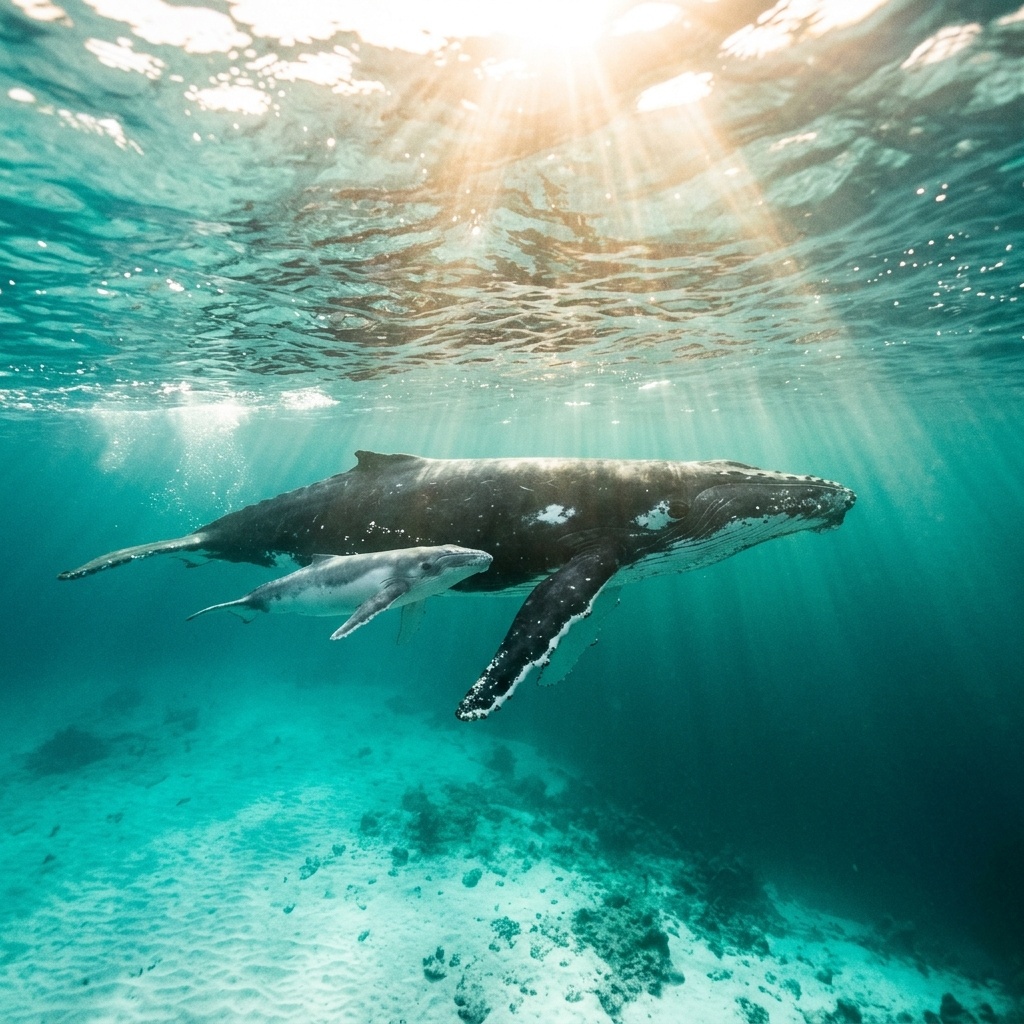
Every southern winter, humpback whales leave their Antarctic feeding grounds and swim several thousand kilometres north to the warm, calm waters of the Mozambique Channel — one of the great migrations on Earth. They come here to do three things: mate, give birth, and nurse their calves in water warm enough for a newborn whale that hasn't yet built up its insulating blubber.
The Inhambane coastline is one of the most important humpback corridors in the western Indian Ocean. The continental shelf runs close to shore along this stretch, which funnels the whales — and their courtship displays — right past the beach. Tofo and Barra get the fame (and the crowds). Pomene, a couple of hours further up the same coast, gets the same whales and keeps the beach to itself.
How to watch: dune, beach or water
From the dune (honestly, the best seat)
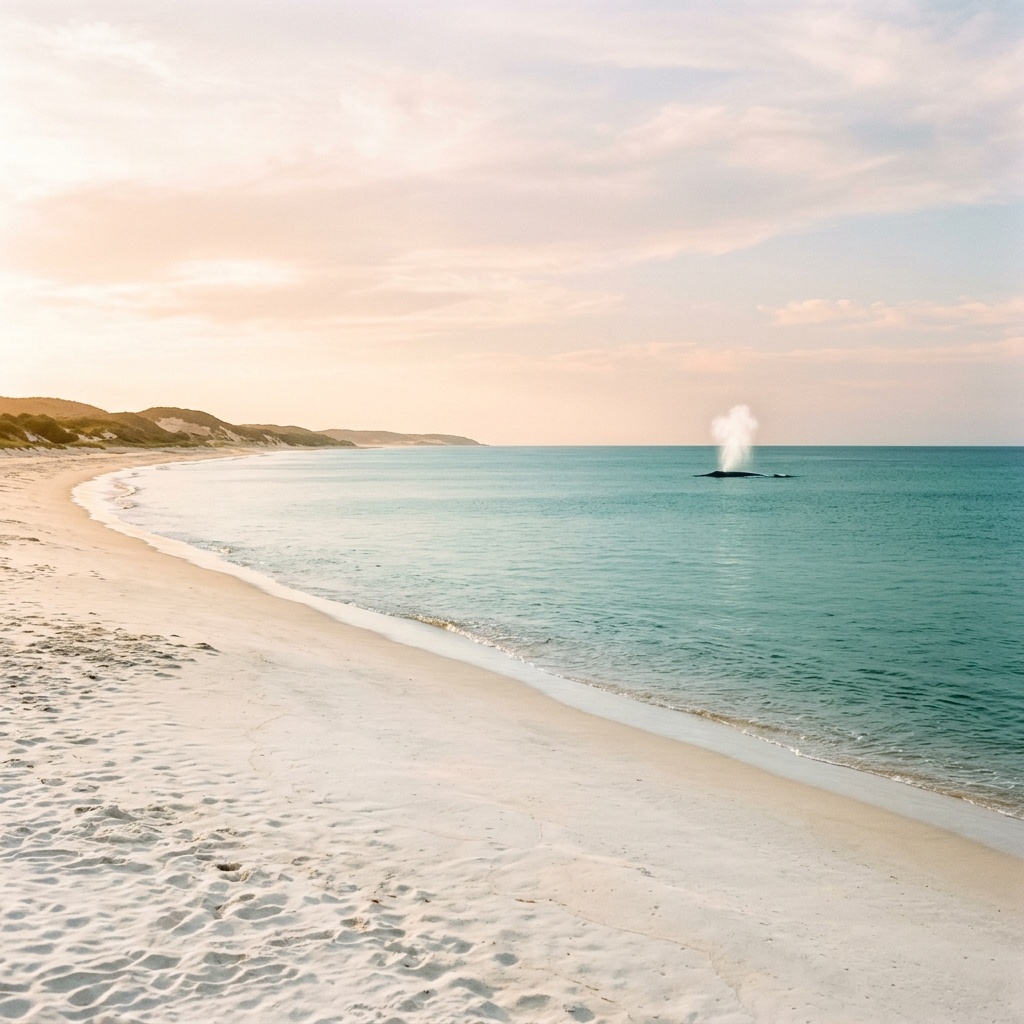
Iz-Ma-An Lodge sits on the dune directly above the beach, facing open ocean. In season, whale watching here means a chair on the balcony, a pair of binoculars and a coffee. Scan the horizon for the blow — a white puff of spray that hangs in the air a second — then keep watching that patch of sea. Whales usually surface several times in a sequence before diving.
From the beach
Walk the shoreline in the early morning when the sea is glassy and the light is low and flat behind you. Whales along this coast typically pass within a few hundred metres to a kilometre of shore — close enough that a full breach is unmistakable with the naked eye.
Look for:
- The blow — the giveaway. Spot the spray first, then the body.
- Breaching — the full launch. If you see one, keep watching; they often repeat.
- Tail (fluke) slaps and pectoral slaps — percussion you can sometimes hear from the beach.
- Footprints — smooth, glassy ovals on the surface where a whale has just dived.
From the water
Divers and snorkellers off Pomene in season sometimes get the most otherworldly encounter of all: whale song, carrying underwater for kilometres — you feel it in your chest before you work out what it is. If you're on a boat while whales are about, the rule is simple and non-negotiable: keep your distance, never chase or cut across a whale's path, and let curious animals close the gap themselves. Mothers with calves get extra space, always.
The whales made this coastline their nursery long before anyone built a lodge on it. We're the guests here.
A realistic word on sightings
Whale watching is nature, not Netflix — there's no schedule and no guarantee for any single hour of any single day. What tips the odds heavily in your favour at Pomene is time: you're not on a two-hour boat tour, you're staying on a dune above the migration route for days at a stretch. Over a multi-night stay in peak season, the question is rarely whether you'll see whales — it's how many times you'll abandon breakfast to point at the sea.
Maximise your chances:
- Go early. Calm, windless mornings make blows and bodies stand out against a flat sea.
- Bring binoculars. The difference between "a splash" and "a breaching whale with a calf alongside".
- Learn the blow. Once your eye is tuned to it, you'll pick up whales everyone else walks past.
- Be patient. Twenty minutes of empty horizon can flip in a single spout.
Planning a whale-season trip
Peak whale months (August–September) are also some of Pomene's most comfortable travel weather — cool, dry and bright. Two practical notes:
- The drive doesn't change with the season: you'll still need a high-clearance 4×4 for the final sand sections into the reserve. Read our honest guide to driving to Pomene before you book flights.
- Book ahead. The lodge has four en-suite rooms in total, and whale season overlaps the South African school holidays in June–July and late September. If you're aiming for a specific week, lock it in early.
New to Pomene entirely? Start with the full Pomene travel guide — where it is, how to get here and what else fills the days between whale sightings.
Want a balcony on the migration route? Check availability at Iz-Ma-An Lodge, or message us on WhatsApp — tell us you're coming for the whales and we'll point you at the best weeks of the season.
Frequently asked questions
When is whale season in Mozambique?+
Humpback whale season in Mozambique runs from roughly June to November. The first whales arrive in June, numbers and surface activity peak from late July through September, October winds down as the migration turns south, and by November most whales have left — though mothers with calves still pass on the return leg.
Can you see whales from the beach in Pomene?+
Yes. The Inhambane coastline sits directly on the humpback migration route, and whales typically pass within a few hundred metres to a kilometre of shore. In season, blows, breaches and tail slaps are regularly visible from Pomene's beach and dunes with the naked eye — binoculars make it even better.
Where is the best place to see humpback whales in Mozambique?+
The Inhambane Province coastline is one of the most significant humpback whale corridors in the western Indian Ocean. Tofo and Barra are the best-known spots; Pomene, further north on the same migration route, offers the same whales with a fraction of the people — including sightings straight from the dune.
Do you need a boat to watch whales in Pomene?+
No. Because the whales pass close to shore, most guests watch from the beach, the dune or the lodge balcony. Calm, glassy mornings give the clearest sightings. If you do head out on the water, keep a respectful distance and let the whales decide how close to come.
Why do humpback whales come to Mozambique?+
Each winter, humpback whales migrate thousands of kilometres north from their Antarctic feeding grounds to the warm, sheltered waters of the Mozambique Channel to mate, give birth and nurse their calves before returning south.
Planning a trip to Pomene?
We'll help you plan every step — the drive, the dates, the season.