
Turtle Nesting Season in Pomene, Mozambique: When and How to See Them (October–March)
See loggerhead and leatherback turtles nest on Pomene's dark, undeveloped beach. A guide to the October–March nesting season — when to go, how to watch responsibly, and where to stay.
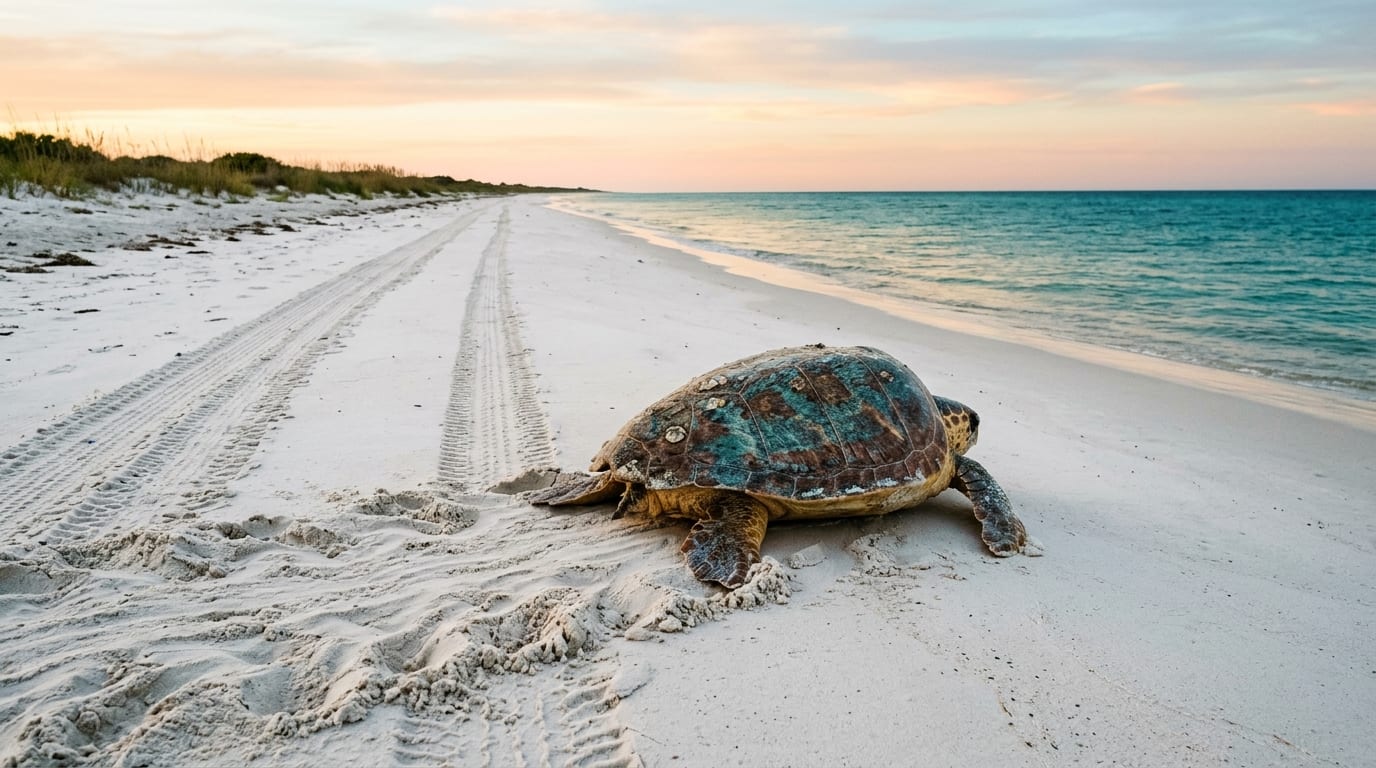
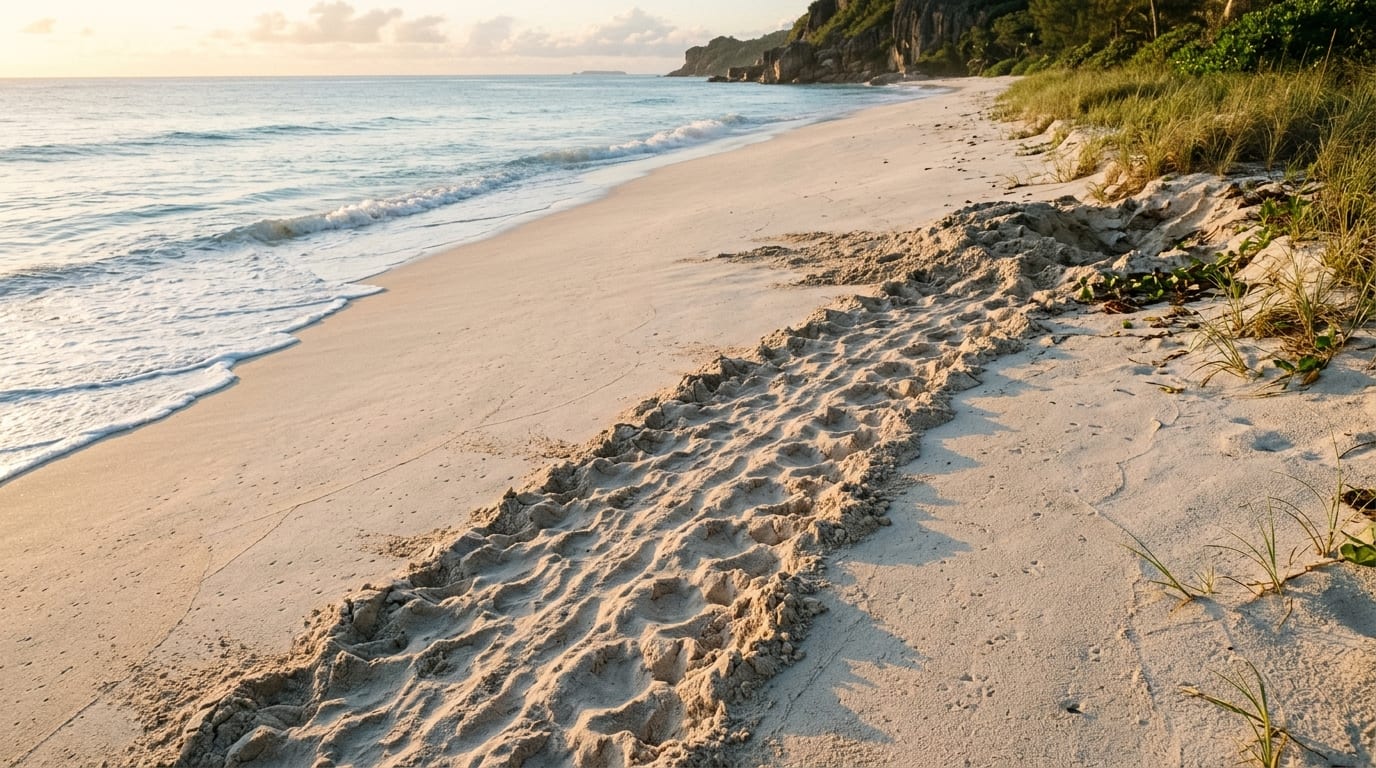
For about half the year the beach below the lodge is just a beach. Then, some time in October, the first set of tractor-wide tracks appears in the sand overnight — up from the water, a churned hollow at the top, and back down again. Turtle nesting season in Pomene has started, and it will run until March.
This is the guide to seeing it: which turtles come ashore, when they lay and when the eggs hatch, how to watch without doing harm, and how to plan a stay that actually gives you a chance of being there on the right night.
Key takeaways
- Season: roughly October to March, with most nesting between November and January.
- Hatchlings: emerge about two months after laying — so late December through March.
- Two nesters: loggerheads (more often) and leatherbacks (rarer, enormous).
- It happens at night, usually on a rising or high tide, on dark, undeveloped sand.
- No sighting is guaranteed. Staying several nights in peak season is what changes the odds.
- Light is the enemy. No white torches, no flash, no phone screens on the beach.
Why Pomene's dark beach is ideal for nesting turtles
Sea turtles are fussy about where they lay, and their requirements are the opposite of what most beach destinations offer: no lights behind the beach, no noise, no vehicles. A female that feels exposed will turn around and go back to the sea without laying at all — it's called a false crawl, and it happens constantly on developed coastlines.
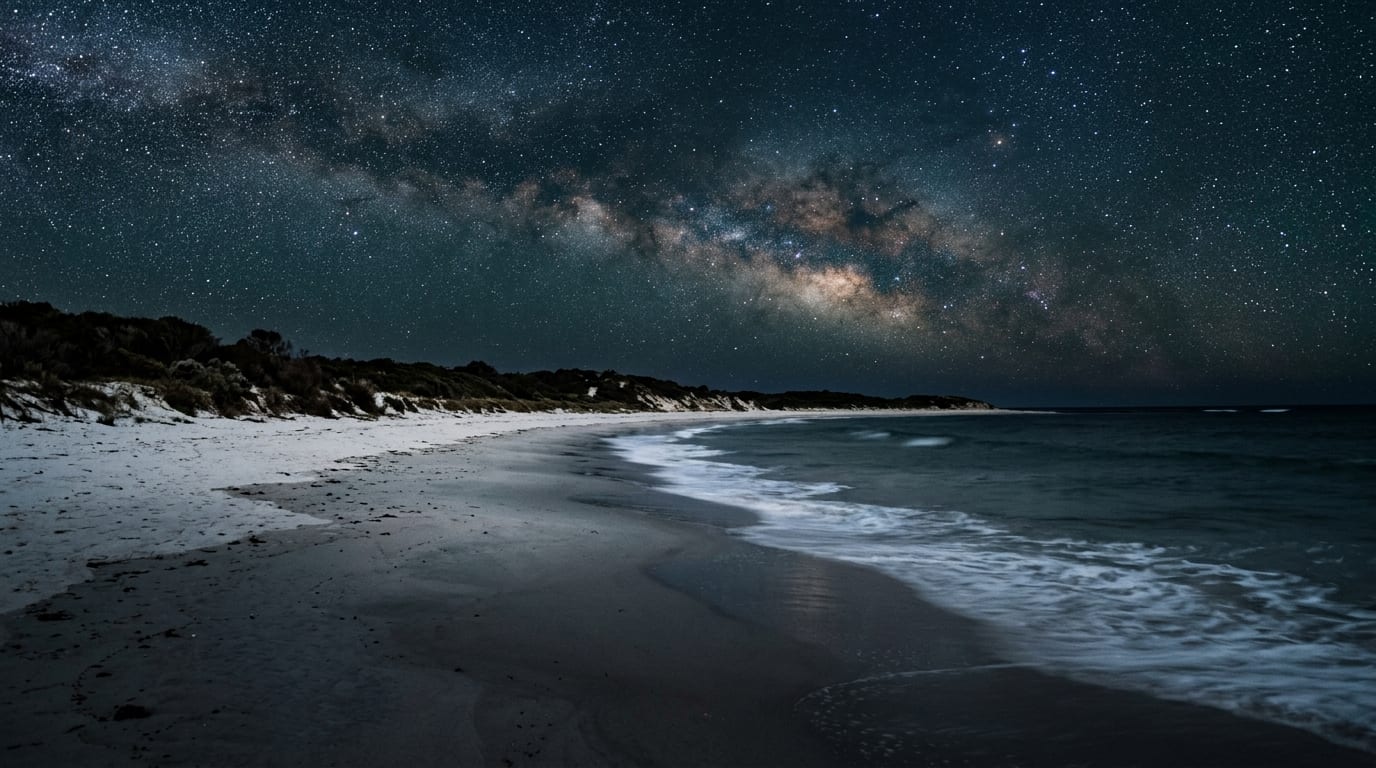
Pomene passes the test almost by accident. It sits inside the Pomene National Reserve, at the end of a long sand track, with a small village, no town, no street lighting and no strip of resorts behind the dune. Walk the beach at 9pm and the brightest thing you'll see is the Milky Way.
That darkness isn't just atmosphere. It's the single reason hatchlings here can still find the sea — the part of the story we come back to at the end.
Loggerhead vs leatherback: what nests here and when
Two species haul out on this coast, and they're easy to tell apart once you've seen either one.
Loggerheads are the ones you're most likely to meet: reddish-brown, hard-shelled, about a metre of shell and roughly a hundred kilograms, with the heavy blunt head that gives them the name. They're the workhorse nester of southern Mozambique, and most tracks you find in the morning belong to them.
Leatherbacks are the rare prize — the largest turtle on Earth, approaching two metres and several hundred kilograms, with a ridged, rubbery shell instead of a hard one. They come ashore in far smaller numbers, and seeing one is uncommon even for people who live on this coast.
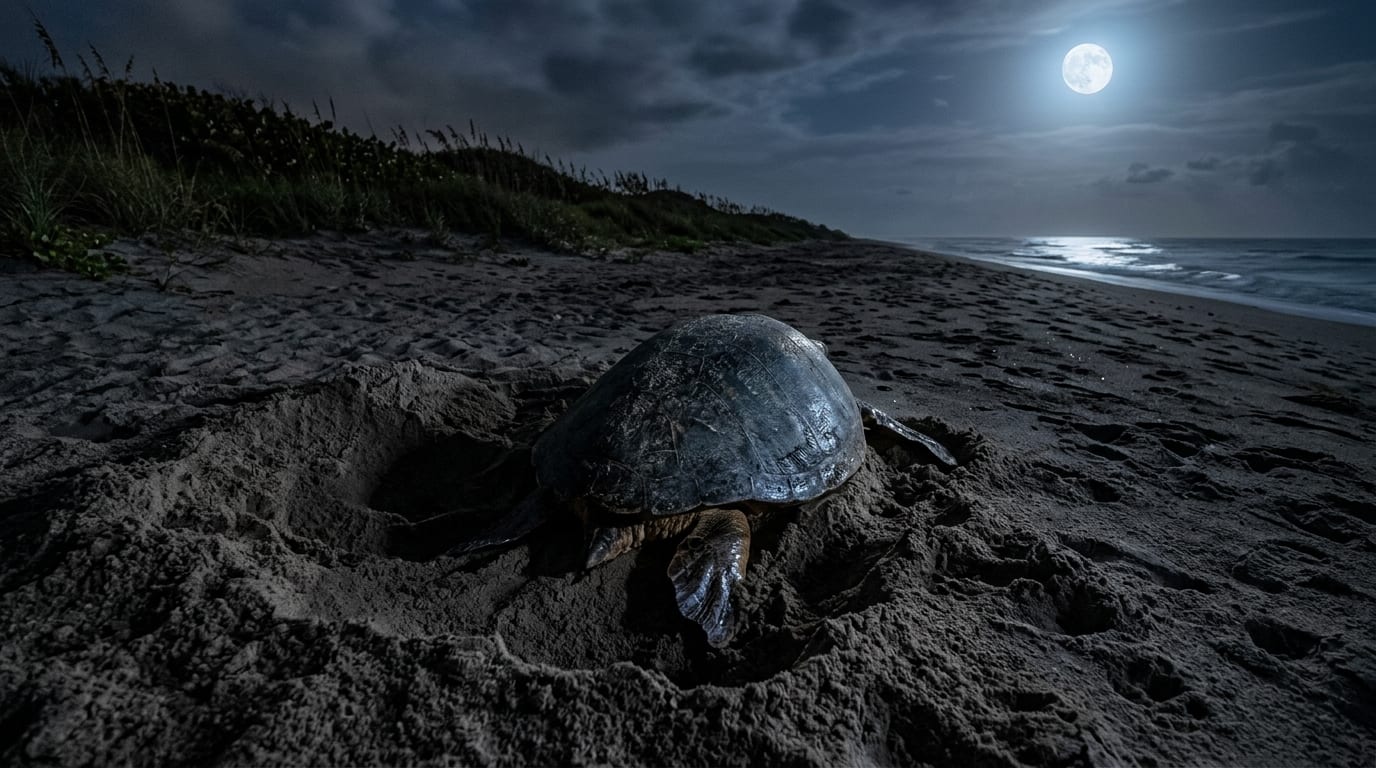
Both nest at night, usually on a rising or high tide, when the walk up the beach is shortest. A female hauls out, digs a body pit, excavates an egg chamber with her back flippers, lays somewhere around a hundred eggs, covers and camouflages the nest, and drags herself back to the water. It takes an hour or two — and once she's laying she enters a kind of trance and is far less likely to abandon it.
Green turtles live over the reefs here year-round rather than nesting on the beach; those are the ones snorkellers meet, and they're covered in our diving and snorkelling guide.
Month-by-month: nesting vs hatching
The two halves of the season overlap, which is worth understanding before you pick your dates.
| Month | Nesting (females ashore) | Hatching (hatchlings emerging) |
|---|---|---|
| October | Season opens — first tracks | — |
| November | Building | — |
| December | Peak | First emergences late in the month |
| January | Peak | Building |
| February | Winding down | Peak |
| March | Last nests | Peak, tailing off |
| April | — | Occasional late emergences |
The mechanism is simple: eggs incubate in the warm sand for about two months, so whatever is laid in December hatches in February. A female also nests several times a season, returning every couple of weeks, which is why activity concentrates rather than spreading evenly.
The best time within the season for a sighting
If you want one answer: December and January.
Those two months sit at the peak of nesting and catch the start of hatching, so you have two chances every night rather than one. They also coincide with warm water and the South African festive-season window, which means they're the first weeks to book out — more on that below.
If your priority is specifically hatchlings, come in February or March. Fewer females are coming ashore by then, but the beach is producing hatchlings, and watching a hundred of them scramble down the sand at dawn is the more emotional of the two experiences.
If you want to combine turtles with humpback whales, come in October or early November, when the last whales of the whale-watching season are heading south past the point while the first turtles are hauling out at night. It's the only overlap in the calendar, and it's a good one.
How to watch responsibly
This is the part that decides whether your night is harmless or damaging. The rules are short and non-negotiable.
- No white light. No torches, no headlamps, no flash photography, no phone screens pointed at the beach. If you need light to walk, use a red filter and keep it low and pointed at your feet.
- Stay behind and stay low. Approach a nesting female only from behind, crouched, and never get in front of her head. A turtle that sees you before she starts laying will abandon the nest.
- Keep your distance and keep quiet. Several metres back, no crowding, no talking above a murmur.
- Never touch a turtle, a nest, or a hatchling. Don't lift them, don't "help" them to the water, don't put them in a bucket.
- Let hatchlings crawl. That scramble down the beach is how they orient themselves and build the strength for their first swim. Carrying them to the sea skips something they need.
- Leave the beach as you found it. Fill in any holes you dug during the day and take furniture and gear off the sand at night — a hatchling that falls into a hole doesn't get out.
- No vehicles on the beach, ever, and especially not after dark.
Tell us on arrival that you're hoping to see turtles and we'll brief you properly — where tracks have been showing that week, which tides to walk, and what to do if you find a female mid-lay.
Combining turtle season with the rest of October–March
Turtle season lands squarely in Pomene's warm months. The nights are for the beach; the days fill themselves.
- Warm-water diving and snorkelling — the sea is at its warmest, and green turtles are on the reef year-round.
- Fishing — the game-fishing calendar runs strongly through the southern summer.
- Kitesurfing — steady wind over an empty lagoon.
- The last whales — October and early November only.
- Doing nothing at all — on a beach this empty, a legitimate itinerary.
For how the months compare, our best time to visit Pomene guide sets weather, water and wildlife side by side, and the Experiences & Seasons section of our homepage is the short version.
Why undeveloped, dark beaches matter
Every sea turtle species on this coast is listed as threatened or worse, and roughly one hatchling in a thousand survives to adulthood — a number that assumes it reaches the water at all.
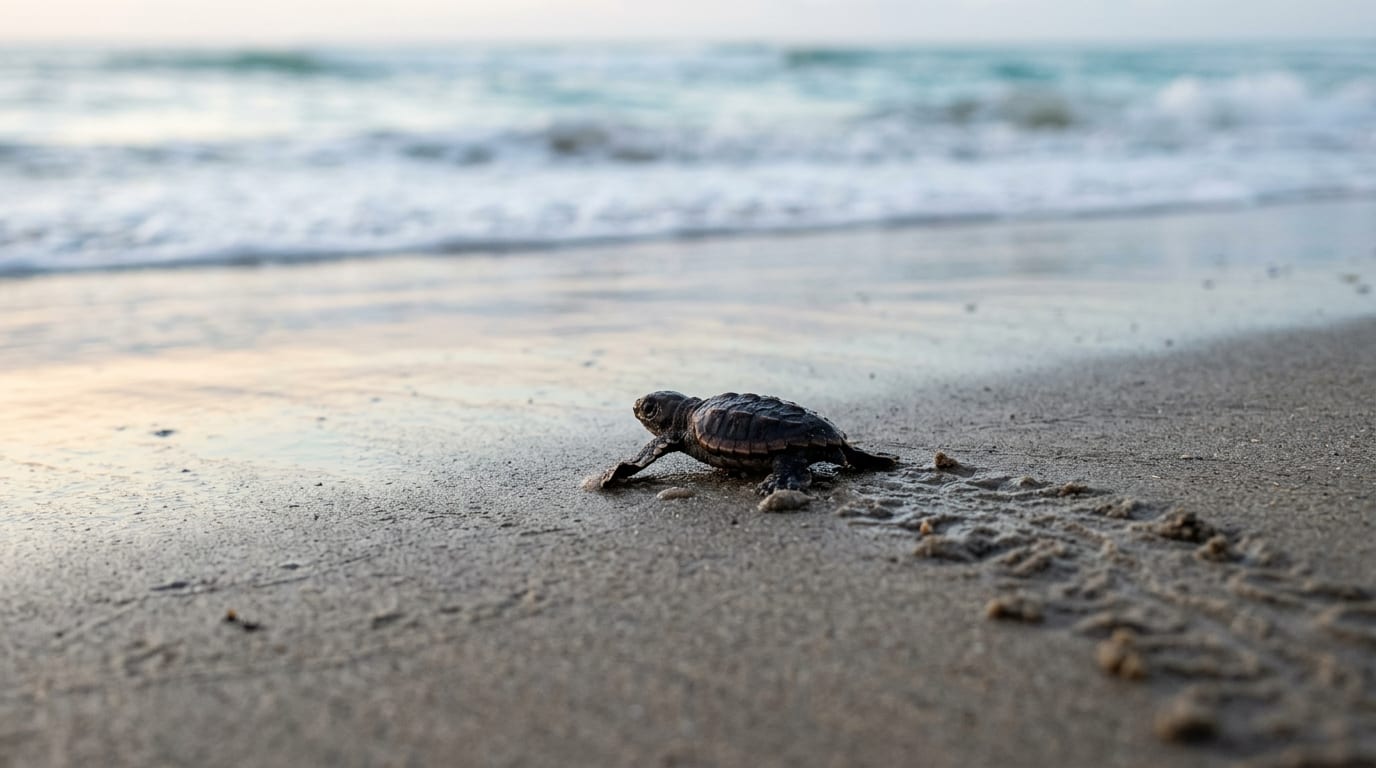
Hatchlings find the sea by crawling toward the brightest, lowest horizon, which on a natural beach is starlight and moonlight on the ocean. Put a security light, a bar or a row of villas behind that beach and the brightest horizon is now inland. The hatchlings turn the wrong way and die of exhaustion or predation before dawn. It's one of the most avoidable ways a nesting beach is destroyed, and it happens quietly, one development at a time. Sand temperature during incubation also determines whether a clutch comes out male or female, so undisturbed dune sand matters nearly as much as the darkness.
Which is the honest argument for a place like Pomene. This beach still works as a nursery because nobody built a town on it — and staying somewhere that keeps its lights off is part of keeping it that way.
Where to stay for turtle season in Pomene
Turtle watching rewards one thing above all: being there, night after night, on the beach itself. That's the problem with staying somewhere you have to drive from — and the reason a small lodge on the dune is the right base for this particular trip.
Iz-Ma-An Lodge sits on the dune directly above the beach, about a hundred metres of sand between the balcony and the water. Four en-suite bedrooms across two units, sleeping eight. A full self-catering kitchen, so a late dinner after a beach walk is normal rather than a problem — plus half-board and fully inclusive options if you'd rather not cook. Solar power, no street lighting, nothing between you and the ocean.
Practically, for a turtle-season trip:
- Stay at least four nights. One night is a lottery ticket; four is a real chance.
- Target December–January for nesting, February–March for hatchlings.
- Book early for the festive window. There are four rooms in total, and December fills first — enquiries for it start arriving in January.
- Bring a red-filtered torch (or red cellophane and a rubber band) and binoculars.
- Plan the drive. The last stretch into the reserve is deep, soft sand and a 4×4 is essential — read our honest guide to the drive before booking flights.
- Arrive stocked. There's no supermarket in Pomene; the big shop happens in Massinga.
New to Pomene altogether? Start with the full Pomene travel guide.
Want to be here when they come ashore? Tell us your dates and we'll tell you honestly where they fall in the season, what's been showing on the beach, and which weeks are still open. Message us on WhatsApp — say you're coming for the turtles and we'll plan the nights around them.
Frequently asked questions
When do turtles nest in Mozambique?+
Nesting season on this coast runs from roughly October to March. Females come ashore after dark to lay, most often between November and January. Eggs incubate for about two months, so hatchlings start emerging from around late December and continue through March, with stragglers into April.
Can you guarantee a turtle sighting?+
No, and be wary of anyone who does. Turtles nest on their own schedule, not on a tour timetable. What raises your odds is staying several nights on a dark, undeveloped nesting beach in the middle of the season rather than making a single visit — which is why guests who stay four nights or more in December or January see far more than day visitors do.
Can you see turtles hatch in Pomene?+
Yes, in the second half of the season. Hatchlings emerge roughly two months after a clutch is laid, so the hatching window at Pomene runs from about late December through March. They usually surface at night or in the cool early morning and make straight for the brightest horizon — the sea. Watch from behind them and never light their path.
Is it safe to be on the beach at night?+
Yes, with sensible precautions. Pomene is a quiet village inside a nature reserve, and our beach is a short walk from the lodge. Go with someone rather than alone, wear closed shoes, carry a red-filtered torch for the walk, and stay above the tide line. Tell us you're hoping to see turtles and we'll point you to the right stretch and the right hours.
Which turtles nest at Pomene?+
Mainly loggerheads, which are the more frequent nester on this coast, and leatherbacks, which are much rarer but far larger — an adult can approach two metres and weigh several hundred kilograms. Green turtles are seen in the water year-round over the reefs, and are the ones snorkellers most often meet.
What is the best beach for turtle nesting in Mozambique?+
The best nesting beaches are dark, quiet and undeveloped, because artificial light disorients both nesting females and hatchlings. Southern Mozambique's protected coastline is the country's turtle stronghold. Pomene qualifies for a simple reason: it sits inside a nature reserve at the end of a sand track, with no town, no street lighting and no resort strip behind the dune.
Do I need a guide to see nesting turtles?+
You don't need a booked tour, but you do need to know where and when to walk, and how to behave if you find a female laying. We'll brief you before you go out — where the tracks have been showing that week, which tides to aim for, and the rules that keep the encounter harmless.
Planning a trip to Pomene?
We'll help you plan every step — the drive, the dates, the season.